
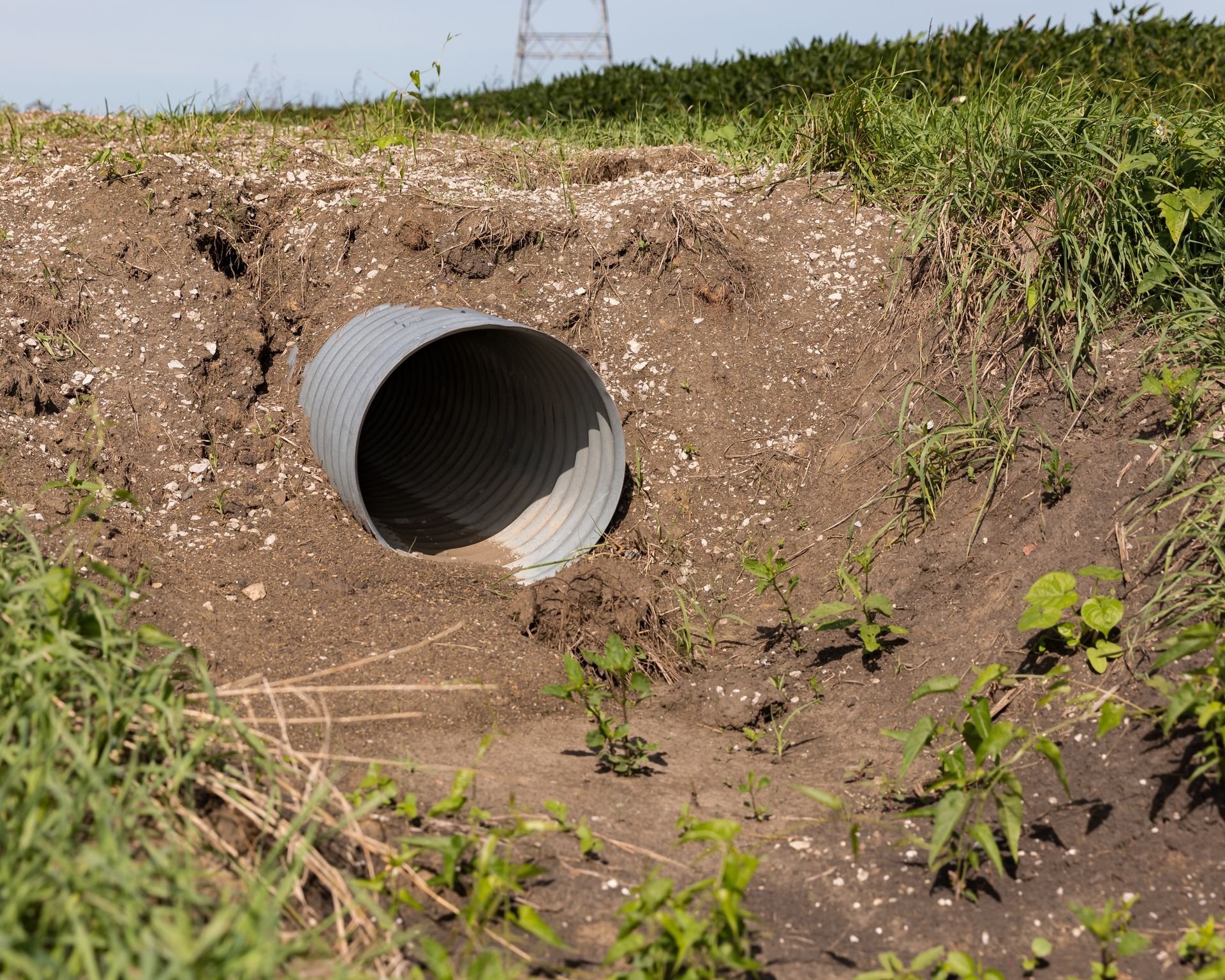
Water Flow Beneath Your Driveway Without Washouts
Driveway Culvert Installation for residential and ranch access roads where water needs to cross under the driveway without eroding the base or creating low spots
JH Landworks installs driveway culverts when runoff from your property or the road ditch needs to pass under your access road instead of flowing over it. You rely on this service when your driveway washes out during storms, when gravel migrates downslope after heavy rain, or when you are building a new entrance and need a proper crossing. The culvert size, inlet alignment, and backfill method determine whether water flows freely or backs up and erodes the driveway from underneath.
The work begins with excavating the ditch to the depth and width needed for the culvert pipe, usually corrugated metal or reinforced plastic sized to match the flow volume and ditch profile. The pipe is set level or at a slight slope, aligned with the ditch so water enters smoothly without turbulence that deposits sediment at the inlet. Backfill is placed in compacted layers over the pipe, and the driveway surface is regraded to restore the original profile or improve it with additional base material and clean fill.
If your driveway has eroded where it crosses a ditch or you are planning a new entrance, contact JH Landworks to discuss culvert sizing and installation details for your property.
How Culvert Sizing and Placement Prevent Long-Term Erosion
Your culvert must be large enough to carry peak flow without causing water to back up and overtop the driveway, and it must be positioned so the inlet and outlet align with the natural ditch grade. JH Landworks selects pipe diameter based on the ditch size and typical storm runoff in the area, usually 15 to 24 inches for residential driveways and up to 36 inches or larger for ranch roads or higher flow volumes. The pipe is bedded on firm soil or crushed stone to prevent settling that creates low spots in the driveway.
After installation, you will notice water flows through the culvert without pooling at the inlet or eroding the outlet, and your driveway stays level without soft spots or washouts. The surface is smooth and stable because backfill was compacted in layers, not dumped loosely, and additional base material was added if the original driveway had insufficient support. Gravel or caliche is bladed even with the surrounding grade so water sheds to the sides instead of channeling down the center of the road.
Inlet and outlet elevations are matched to the ditch profile so water does not drop sharply and scour soil at the discharge end, and headwalls or riprap can be added if erosion risk is high. If your driveway crosses a county-maintained ditch, the culvert installation is coordinated with local standards to avoid blocking flow or increasing flood risk downstream. The finished surface is left clean and ready for traffic without waiting for settling or additional grading.
What You Should Understand Before Installing a Culvert
Culvert projects in Hallettsville depend on accurate flow assessment and proper installation depth, so knowing the details helps you avoid undersized pipes or driveway failure.
What size culvert is needed for a typical ranch driveway?
Most ranch driveways use 18- to 24-inch diameter pipe, but size depends on the ditch width, peak flow volume, and whether the culvert will also carry runoff from upslope areas during heavy rain.
How deep should the culvert be placed under the driveway?
The pipe is set at the natural ditch bottom elevation with at least 12 inches of compacted fill over the top to support vehicle loads without crushing the culvert or creating a soft spot in the road surface.
When is headwall or riprap needed at the culvert outlet?
Headwalls or riprap are added when the outlet discharges onto erodible soil or when flow velocity is high enough to scour a channel, which often happens on steeper grades or larger diameter pipes.
Why does water sometimes pool at the culvert inlet after installation?
Pooling usually means the inlet elevation is too high relative to the ditch bottom, or sediment and debris have blocked the opening because the pipe was not aligned with the flow path.
What material is used to backfill over the culvert?
Backfill is typically native soil if it is stable, or imported select fill and crushed base if the existing material is too soft or sandy to support traffic loads without excessive settling.
JH Landworks evaluates your ditch profile, driveway width, and flow conditions before selecting pipe size and placement. Reach out with your project location and any drainage challenges so the crew can plan the installation and order materials.