
Drainage Flow That Stops Erosion and Standing Water
Ditch Work in South Texas for agricultural land, driveways, and rural access roads where water needs to move away from structures and pavement
JH Landworks handles ditch excavation and reshaping in your area when you see water pooling along your driveway, eroding pasture edges, or undercutting road shoulders after heavy rain. You need this service when existing ditches have filled with sediment, lost their original grade, or were never cut deep enough to handle runoff during typical Texas storms. The shape and slope of the ditch determine whether water moves off your property or sits long enough to soften soil and damage infrastructure.
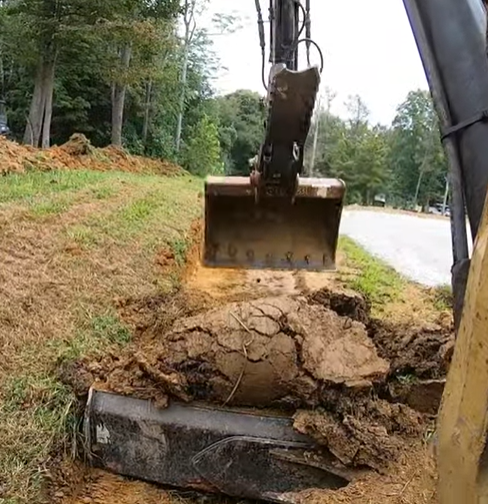
The work starts with clearing vegetation and debris from the existing ditch line, then excavating to restore or establish the correct depth and cross-section. Proper grading creates a consistent downhill slope so water flows toward an outlet without reversing direction or slowing in flat sections. Side slopes are angled to prevent collapse and allow equipment to cross without damaging the ditch profile. Spoil is spread evenly on the downslope side or used to fill low areas, depending on your drainage plan and property layout.
If water is not draining as it should or you see erosion forming new channels, contact JH Landworks to assess your site and discuss ditch grading options.
Why Ditch Profile and Grade Control Matter for Long-Term Performance
Your ditch must have enough depth and width to carry peak flow without overtopping, and the bottom must slope continuously toward the discharge point. JH Landworks uses a hydraulic excavator to shape the ditch and checks grade with a laser level or transit to confirm water will move as intended. Flat spots or reverse grades cause water to pond, deposit sediment, and reduce capacity over time.
After the ditch is cut and graded, you will notice water drains quickly after rain instead of sitting for hours or days. Erosion along the ditch banks stops because flow velocity is controlled by the profile, and the path is wide enough to prevent scouring. Your driveway or road edge stays intact because water is directed away before it can undercut the base or wash gravel into the travel lane.
Side slopes are shaped between three-to-one and two-to-one depending on soil stability, so the ditch does not slough in or require frequent maintenance. Vegetation is left on the side slopes where it helps hold soil, but the bottom is cleared to maintain flow capacity. If your property drains to a neighbor or county right-of-way, the outlet elevation and alignment are coordinated to avoid redirecting water onto adjacent land.
Common Questions About Ditch Excavation and Grading
Ditch work in Southern Texas often involves balancing flow capacity with site access and soil conditions, so understanding the planning and execution helps you get the results you need.
What depth is needed for a roadside ditch on rural property?
Depth depends on the road elevation and the amount of runoff, but most ditches are cut at least 18 inches below the road shoulder to provide capacity and prevent water from reaching the pavement edge.
How is the slope of the ditch bottom determined?
Slope is based on the elevation difference between the starting point and the outlet, typically at least one percent grade to keep water moving without excessive velocity that causes erosion.
When should a ditch be reshaped instead of cleaned out?
Reshaping is needed when sediment has filled the ditch to the point where the original grade is lost, or when the profile is too narrow or shallow to handle current runoff volumes.
Why does water still pool in some sections after the ditch is dug?
Pooling usually means there is a flat spot or reverse grade in the bottom, often caused by inconsistent excavation depth or settling in soft soil areas that were not properly compacted.
What happens to the soil removed during ditch excavation?
Spoil is spread on the downslope side to build up low areas or create a berm, or it is hauled off if there is no room to place it without blocking drainage or access.
JH Landworks evaluates your drainage path, soil type, and discharge options before starting excavation to ensure the ditch will function as intended. Call with your site details and any existing drainage problems so the crew can plan the work and schedule equipment.