
Build Water Sources That Support Livestock
Cattle Tanks & Ponds for stock water and land management on ranches and rural properties
JH Landworks excavates and shapes cattle tanks and ponds when you need reliable water for livestock, when existing tanks have silted in or lost capacity, or when you are developing pasture that lacks surface water. You reach out when cattle walk too far for water in summer heat, when drought exposes mud and reduces tank volume, or when you want a pond that holds water through dry months without constant refilling. The work involves cutting into the land to create a basin, shaping slopes that resist erosion, and compacting soil or adding clay to improve water retention.
Cattle tanks and ponds provide more than drinking water. They support grazing rotation by distributing stock across multiple pastures and reduce pressure on creeks and natural water sources. A properly built tank captures runoff from surrounding land and holds it in a basin deep enough to avoid complete evaporation during extended dry periods. Slopes are graded to prevent cattle from bogging in soft edges, and spillways are cut to handle overflow during heavy rain without washing out the dam or eroding adjacent ground. Soil composition and land slope are evaluated before excavation begins, as clay content and natural drainage patterns determine how well the tank will seal and fill.
If you need a stock tank or pond built to support your operation, contact JH Landworks to discuss site selection and excavation work.
Site Selection and Excavation Process
The process begins with walking the property to identify low areas that collect runoff and examining soil samples for clay content that aids sealing. A location is chosen where natural drainage will fill the tank without requiring constructed channels, and where the dam can be built with material excavated from the basin. A trackhoe or dozer cuts into the land to create depth, and excavated soil is used to build up the dam on the low side. The basin floor is sloped toward the deepest point, and the dam face is compacted in lifts to prevent settling and seepage. Spillways are graded to carry overflow away from the dam without cutting back into the structure.
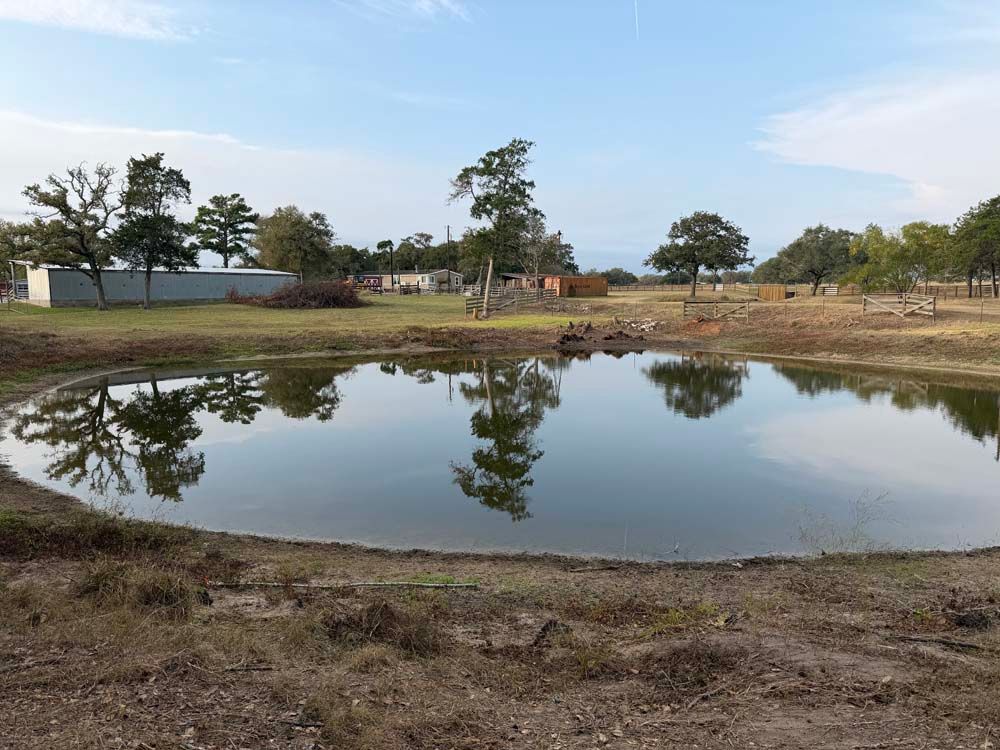
After construction, you will see a water-holding basin that fills with rain and runoff, a compacted dam that resists erosion, and slopes that allow livestock to drink safely without trampling soft edges. The tank will hold water through dry months if built in soil with adequate clay, and it will support grazing management by providing distributed water access. JH Landworks shapes tanks and ponds to match the land and climate conditions.
The work includes site assessment, excavation, dam construction, slope shaping, and spillway grading. It does not include fencing around the tank, installation of water lines or pumps, or ongoing maintenance such as sediment removal or vegetation control. If soil lacks sufficient clay, amendments or liners may be discussed to improve water retention, though these are not included in standard excavation pricing.
Common Questions About Tanks and Ponds
The following answers address practical concerns about cattle tank construction, water retention, and site requirements.
What size tank is needed for a herd?
A general guideline is one surface acre of water for every twenty to thirty head of cattle, though actual needs depend on stocking rate, rainfall, and availability of alternative water sources.
How deep should a stock tank be?
Tanks are typically excavated to a depth of ten to fifteen feet at the center to maintain water volume through evaporation and provide reserve during drought.
When is the best time to build a tank?
Construction is best done during dry months when soil moisture is low and equipment can access the site without bogging or causing excessive compaction.
Why does clay content matter?
Clay particles swell when wet and seal pore spaces in the soil, reducing water loss through seepage and allowing the tank to hold water without a liner.
How is the dam compacted?
Soil is placed in thin layers and compacted with the weight of a dozer or by driving heavy equipment over each lift, which increases density and reduces the risk of piping or failure.
For excavation of cattle tanks and ponds that provide reliable water for livestock and support land management, reach out to JH Landworks to review your site and schedule construction.